Early Orthodontic Treatment for Kids
Give your child the gift of a beautiful, naturally developing smile that lasts a lifetime.
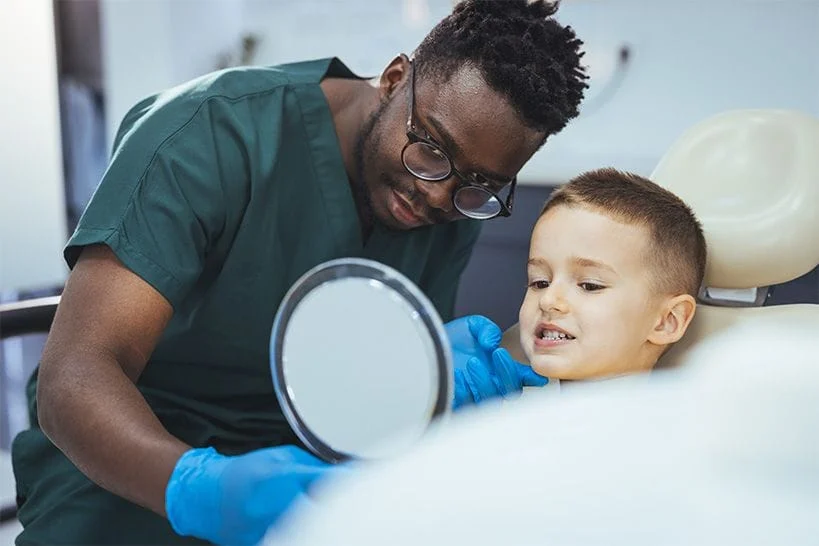
When Should Kids Start Orthodontic Treatment?
Most children benefit from their first orthodontic checkup around age 7. At this stage, our orthodontists can identify jaw or tooth alignment issues before they become complex problems.
Early evaluation doesn’t always mean immediate treatment—but it gives parents valuable insight into their child’s growth patterns and helps us create a personalized monitoring plan.
This proactive approach, known as early orthodontic treatment or interceptive orthodontics, allows us to guide your child’s development naturally rather than correcting major issues later.
Early Orthodontics Means Healthier Smiles
Starting early helps your child’s teeth, jaw, and airway develop naturally. At Greeley Kids Dental, our pediatric orthodontics specialists focus on growth guidance not just braces.
Early orthodontic treatment can help:
- Guide jaw growth and prevent crowding
- Encourage proper tooth spacing and bite alignment
- Reduce speech, breathing, or chewing difficulties
- Prevent future extractions or prolonged treatment
- Boost confidence as your child grows
When treatment begins early, results come faster and feel more natural—setting your child up for a lifetime of healthy smiles.
Is Your Child Experiencing Any of These?
Early orthodontic treatment can help:
- Early or late loss of baby teeth
- A hard time chewing or biting food
- Mouth breathing
- Finger or thumb sucking
- Crowded, misplaced, or blocked teeth
- Jaws that pop or make sounds when opening and closing
- Teeth that come together abnormally, or do not come together at all
- Jaws and teeth that are not proportionate to the rest of the face
- Crowded front teeth around age seven or eight
If any of these sound familiar, your child may need orthodontic treatment. The best way to know for sure is to come in for an appointment with one of our expert orthodontists. They’ll help you gage your child’s situation and put together a treatment plan that maximizes results.
Our Step-by-Step Approach to Early Orthodontics
We divide children’s orthodontic care into two main phases designed to align with your child’s growth:

Phase 1 Orthodontics (Ages 6-12)
This preventive stage focuses on jaw development, spacing, and early alignment. Functional appliances or limited kids braces may be used to create space for adult teeth and encourage proper growth.
Many children who begin treatment in this stage may shorten or even eliminate the need for full braces later on.

Phase 2 Orthodontics (Ages 12 to 14)
Once all permanent teeth have erupted, we fine-tune alignment and bite with full braces or clear aligners. Because Phase 1 addressed foundational issues, Phase 2 is typically quicker and more comfortable.
A Parent’s Guide: What to Expect at Each Stage
| Age Range | What happens | Why it matters |
| 6-7 | First orthodontic evaluation | Detect early signs of misalignment and jaw imbalance |
| 8-10 | Growth monitoring | Identify spacing or crowding concerns before adult teeth erupt |
| 11-13 | Interceptive treatment if needed | Guide natural growth for better long-term results |
FAQ: Parents’ Common Questions About Pediatric Orthodontics
What is interceptive orthodontics?
Interceptive orthodontics focuses on detecting and treating dental and jaw issues early—before all permanent teeth erupt. This approach “intercepts” problems in their developmental stages, reducing the need for more intensive treatment later.
What age should my child have their first orthodontic checkup?
According to the American Association of Orthodontists, children should have their first orthodontic checkup by age 7. This early visit helps identify whether your child may benefit from growth monitoring or early intervention.
Are kids braces always necessary during early orthodontics?
Not always. Sometimes, simple growth guidance or removable appliances are enough to correct alignment. If kids braces are recommended, they’re typically used for short, targeted treatment periods during Phase 1.